Infinite Spiral Staircase Theory, (ISST)
What role does consciousness play in the universe? Does consciousness exist independently of the brain? Do all things possess consciousness—or only living beings?[1] These are age-old questions that have been debated and researched across many disciplines—from psychology and neuroscience to quantum physics. I don’t intend to enter these debates from a scientific standpoint (because, honestly, I wouldn’t know how to debate it anyway  ). However, while reading about the realms of existence, I came across the work of Chris H. Hardy.[2] whose theories I found quite fascinating—especially the Infinite Spiral Staircase Theory (ISST)[3]. It resonated with something I’ve long been searching for. It also integrates and reconciles various existing theories in a harmonious, elegant way. I’ll summarize ISST here simply as a reference—please keep in mind, these are not my direct experiences or realizations. Where noted, I include some of my personal comments and associations, based on things I’ve read or heard before.
(1) Premises
+ Most existing theories focus on the material universe—molecules, atoms, stars, galaxies—which account for only 5% of the total energy in the universe. The remaining 95% consists of Dark Energy and Mark Matter[4], which science still doesn’t fully understand—what they are, how they interact with the rest of the cosmos.
Comment: This reminds me of what Mun said in the Dhamma talk “Vat-Chat-Toi-duoi-Goc-nhin-dao-Phat.mp3,”[5], where she suggests that dark matter is akin to the human mind or thought.
+ Furthermore, the phenomenon of Quantum Entanglement’ [6] —in which two particles in an entangled pair appear to communicate instantaneously, regardless of distance (i.e., information transmission faster than light, known as non-locality)—remains inexplicable within the framework of Einstein’s General Relativity, which governs our four-dimensional reference frame (3D space + 1D time).[7]
+ The research of Dr. Rupert Sheldrake, a British scientist, on Morphic Resonance[8], (a kind of natural memory field), seems to align with earlier studies [9] proposing that consciousness may exist inherently within nature itself.
(2) Core content
These premises form the foundation for a new theory that attempts to unify and resolve inconsistencies among current models. Combining these ideas with speculative assumptions—such as the existence of subtle entities, bands of consciousness, and even the persistence of a soul after death (perhaps inspired by the insights of Dr. Hardy’s meditative experiences[10])—she proposed the Infinite Spiral Staircase Theory (ISST). Here are some of its key ideas:
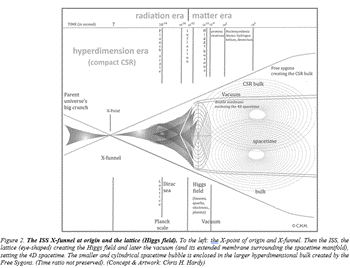
+ There exists a Hyperdimension (HD) composed of: Hyperspace, Consciousness, Hypertime.
+ When a Hyperdimension dies, it condenses into a black hole, which then transitions into a white hole, erupting at extraordinary speed to form a new Hyperdimension—carrying with it all the conscious (informational) imprints from the previous system, like a form of cosmic DNA.
Comment: This transformation feels analogous to the Linking, Death, and Rebirth Consciousness stages from Abhidhamma—except now scaled to the level of the entire cosmos. Could it be that when Brother Ba Danh focused his mind down to a pinpoint and experienced a burst—he was merging his individual soul with the soul of the universe, triggering prajñā wisdom? Perhaps this method of practice is a pathway home, a return to the navel of the cosmos?
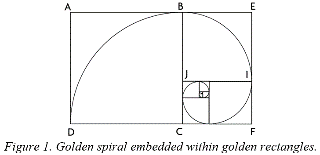
+ This Hyperdimension takes the form of a spiral structure, shaped according to the golden ratio (φ = 1.618), expanding outward along the Fibonacci sequence.[11] Each turn of this spiral (e.g., a turn within a square labeled JIEB) possesses a different radius, and therefore vibrates at a distinct frequency.
+ Near the core of the Hyperdimension[12], the vibrational frequency is extremely high—over 1043 (10 to the power of 43) oscillations per second. As one moves outward from the core, the frequency gradually slows down, and the wavelengths become longer. Thus, the language of the universe is music—expressed through rotations, resonances, and wave vibrations. The full spiral and each individual bend or arc (called a bow) form Hyperspace (the Center-Circle). The oscillations constitute Hypertime (Rhythm-Rotation). And the entire information content carried within these structures forms the Consciousness—the Soul of the Universe (Self HD, Syg HD).
Comment: Brother Alpha (and Mun) have said that all forces of interaction in the universe take spiral forms. Thầy Tibu once spoke of listening to the sounds and colors of the cosmos when instructing a monastic in meditation. Perhaps each bow, with its unique vibrational frequency, provides the right conditions for certain realms to arise and exist?!!
+ The earliest segment of the Hyperdimension does not yet contain particles. Only after the Planck threshold do particles begin to emerge. As one moves farther from the core, atoms, molecules, and physical matter gradually form, eventually giving rise to the reference frame in which we currently live.
Comment: If ISST is correct, then there must be other reference frames far beyond our own. But what kind of matter exists in those distant realms? Is it heavier or lighter? How does it correlate with the lower frequencies and longer wavelengths of those areas? According to ISST, there seems to be an inverse relationship between mind (frequency, wavelength) and matter (form). It may be that only when the mind becomes still can we truly perceive these more subtle vibrations.
+ Each Fibonacci bow constitutes a system that is both dependent on and independent of the Hyperdimensional core. It’s dependent, because all such systems arise from the same source and continually exchange information with the center. Thus, the information at the center never diminishes—it grows increasingly abundant. At the same time, these systems are independent, because they possess the freedom to organize, evolve, and transform in their own ways. Within each such bow-system exists countless sub-systems—stones, plants, animals, and humans—each carrying its own consciousness, its own Self. Notably, ISST rejects the idea of a singular creator god. Moreover, due to the dynamic interactions between smaller and larger systems, the future is not fixed—destiny is not predetermined.
Comment: Brother Alpha once said, “Nothing comes from nothing,” when reflecting on meditation technique development. Master Tibu mentioned that Brother Phước Nhỏ got stuck contemplating destiny. So perhaps the question isn't whether destiny exists or not, but rather: What percentage of our life is shaped by fate, and what percentage can be changed? And naturally, those probabilities may change over time. Maybe it’s best not to ask at all—remember the parable of the man shot with a poisoned arrow?[13]
+ The same logic applies to human beings. Each of us is a subsystem within the Hyperdimension, carrying a network of information fields (syg-fields) and involved in countless dynamic interactions—mental, physical, and relational. Our lowercase self (ego) primarily functions to manage our relationships and interactions in the physical and social world. Only through inner practice—for example, meditation—does this ego undergo individuation and evolve into the uppercase Self which can then resonate in harmony with the universal Soul. According to ISST, death is simply the shedding of the physical-biological form, severing the link between the material body and the Self—and its accompanying information field. From the perspective of cosmic consciousness, ISST does not lead to any judgment or punishment of souls after death. Rather, it views the post-mortem phase as a process of learning, responsibility, and refinement—so that the Self may become ever more complete.
Comment: The syg-field seems to contain past karmic forces and new karma (good and bad) generated in this current life. Master Tibu once explained that hell isn't a place where someone cuts your tongue out, as we might imagine, but rather a self-generated experience—a karmic echo the soul creates and endures. This fits well with ISST, where every action, word, relationship, love, and hatred is wrapped into one’s syg-field, and these patterns reappear in the next life. The concept of “Nine Generations of Ancestors” may even arise from this: the syg-field of familial love becomes reactivated in future existences. As Bé Hạt Tiêu once said: “We must take responsibility for our own actions.”
+ At the end of the article published in the Scientific GOD Journal, Dr. Hardy points out that at both the beginning (birth) and end (decay) of the Hyperdimension—and in the surrounding region of our current reference frame (Quantum Spacetime, QST)—there exist zones referred to as Pure Hyperdimensional Systems These are spaces without material existence, yet they contain beings, systems, and networks with high levels of conscious energy. These entities (including the Self of the deceased) can interact with and influence the structure of the material world within QST.
Comment: This reminds me of phenomena like spirit possession, mediumship, etc. We still don’t know exactly where the more refined, luminous beings reside within the Hyperdimension. According to Abhidhamma, the concept of form (rūpa) is not limited to what we can touch, see, or smell.
(End of Part 10/11)
Notes:
[1] https://en.wikipedia.org/wiki/Panpsychism
[2] https://www.innertraditions.com/author/chris-h-hardy;
https://independent.academia.edu/ChrisHHardy.
In a video where Dr. Hardy presents her ISST theory, she shares that she had awakening experiences from the age of 18. She holds a PhD in Ethnopsychology and is a cognitive scientist who researches cosmic consciousness.
[3] Hardy, C.H., 2017. ISS theory: Cosmic consciousness, self, and life beyond death in a hyperdimensional physics. Scientific GOD Journal 8(5), 375–394. Hardy, C.H., 2017. Nonlocal consciousness in the universe: Panpsychism, psi and mind over matter in a hyperdimensional physics. Journal of Nonlocality: Special Issue on Psi and Nonlocal Mind, 1–21. Hardy, C.H., 1997. Semantic fields and meaning: A bridge between mind and matter. World Futures: Journal of General Evolution 48, 161–170. Her book Cosmic DNA at the Origin (2015) explains ISST in greater detail.
[4] https://en.wikipedia.org/wiki/Dark_matter
[5] https://www.hoasentrenda.com/smf/index.php?topic=17271.msg62965#msg62965
[6] https://en.wikipedia.org/wiki/Quantum_entanglement;
https://www.youtube.com/watch?v=ZuvK-od647c.
[7] A key philosophical tension: Does the universe follow a pre-existing structure as per General Relativity (GR), or is everything governed by probability as in Quantum Mechanics (QM)?
[8] https://en.wikipedia.org/wiki/Rupert_Sheldrake;
https://www.youtube.com/watch?v=1TerTgDEgUE.
[9] Related philosophical ideas: Aristotle’s Four Causes, Synchronicity by Carl Jung and Wolfgang Pauli, Semantic Field Theory by Chris Hardy. .
https://en.wikipedia.org/wiki/Aristotle#Four_causes;
https://en.wikipedia.org/wiki/Carl_Jung; https://en.wikipedia.org/wiki/Wolfgang_Pauli.
[10] Regarding Dr. Hardy’s insights: Whether her visions are accurate, or whether they arise through self-power or external support—I refrain from commenting, as I simply don’t know.
[11] Although the Fibonacci sequence is infinitely large, the number of spiral turns in ISST is only quasi-infinite—extremely large but not without bounds. Within each square of a Fibonacci arc is a circle whose radius is half the square’s edge. The circumference of this circle corresponds to the Fibonacci arc’s radius and follows the constant pi (p = 3.1416).
https://en.wikipedia.org/wiki/Golden_ratio;
https://en.wikipedia.org/wiki/Fibonacci_number;
https://www.youtube.com/watch?v=2VtYyHx77cs.
[12] The smallest measurable quantum unit is the Planck scale, discovered by German physicist Max Planck. For example, one Planck time = 5.39*10-44 seconds, and one Planck length = 1.616*10-35 meters.
https://en.wikipedia.org/wiki/Planck_units.
[13] https://soha.vn/bi-mon-do-hoi-thuc-duc-phat-ke-cau-chuyen-mui-ten-tam-thuoc-doc-khien-anh-ta-ngo-ra-tat-ca-20190726145106218.htm